
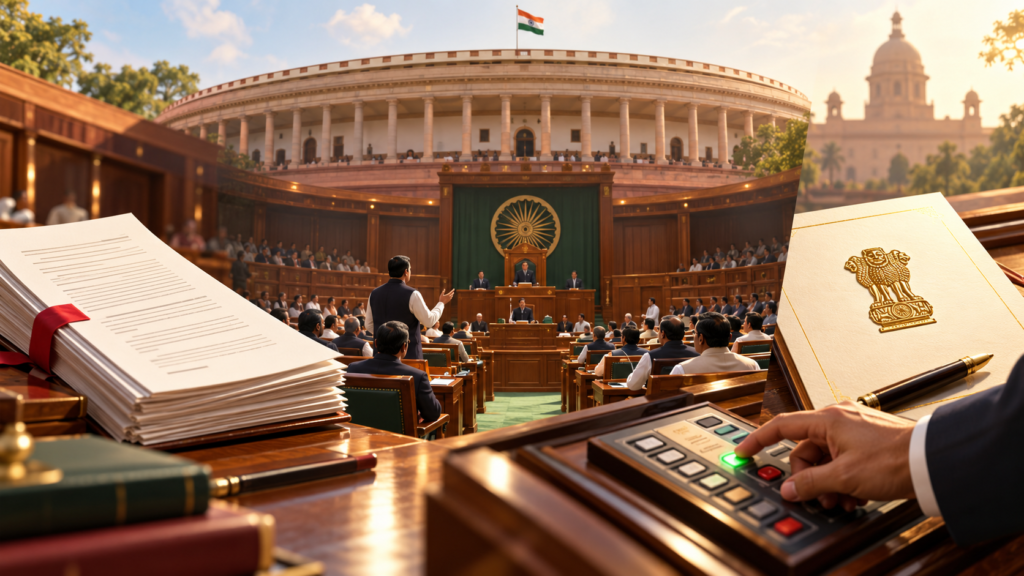
How an ordinary bill becomes law in India
A bill is a proposed law. For an ordinary bill in Parliament, introduction is only the first step: members then examine and debate its provisions, consider amendments and vote on whether to pass it.
The route through Parliament
An ordinary bill may begin in either the Lok Sabha or Rajya Sabha. The house in which it is introduced considers it through successive stages, which can include detailed scrutiny by a committee. After one house passes the text, the other house must agree to it. If the second house changes the bill, both houses must settle on the same text.
When does it become an Act?
Once both houses pass an ordinary bill in identical form, it goes to the President for assent. It becomes an Act only after that assent. The rules differ for money bills and constitutional amendments, so this route should not be assumed for every proposal.
For readers following a headline about a bill being introduced or passed in one house, the key distinction is simple: those milestones do not by themselves mean the proposal has become law.