Delhi-NCR Activates GRAP Stage I as AQI Reaches 244; Schools and Offices Remain Open
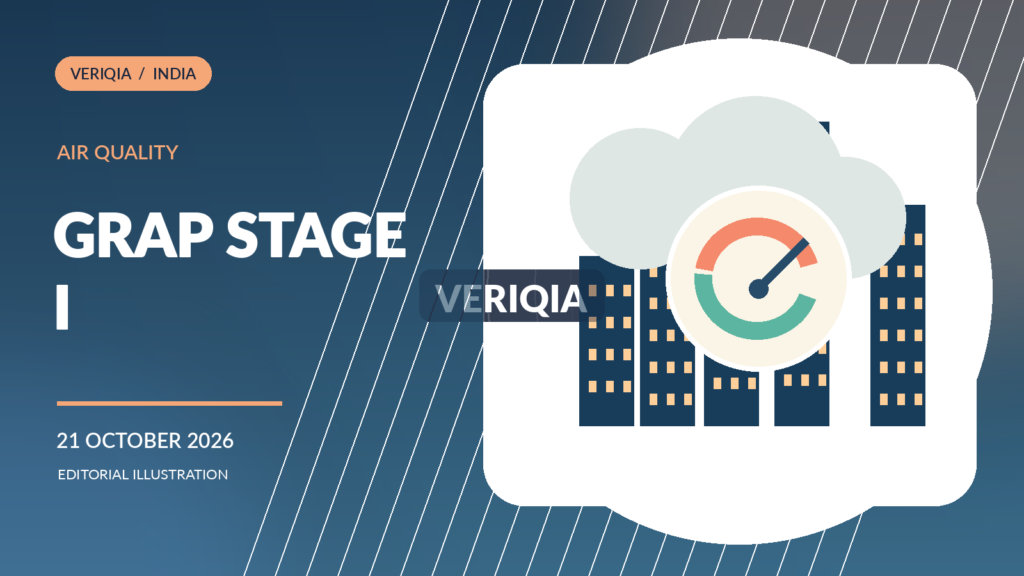
Delhi’s air quality worsened into the poor category on Wednesday, October 21, prompting the Commission for Air Quality Management to activate Stage I of the Graded Response Action Plan across the National Capital Region. The Air Quality Index reached 244 at 2 p.m., compared with 179 a day earlier, according to reporting on the commission’s decision. Stage I brings targeted pollution controls; it does not mean that schools or offices have been ordered to close. Residents should distinguish measures in force today from other winter restrictions announced for later dates.
What changed on Wednesday
The commission’s subcommittee reviewed the air-quality readings and forecasts before applying Stage I. The category threshold is important: under the revised framework, an AQI of 201 to 300 is considered poor and is the trigger range for this stage. An AQI number is a snapshot tied to time and monitoring methods, not a fixed reading for every street. The commission’s action applies across the NCR and calls on multiple agencies to intensify prevention and enforcement.
What Stage I means
The first stage focuses on dust suppression, emissions checks, waste management and compliance with existing restrictions. Reporting on the order includes tighter monitoring of construction sites and restrictions on burning coal or firewood in certain eateries. Enforcement is carried out by responsible civic and pollution-control agencies. The full list of applicable measures should be checked against the current commission order, because different restrictions have different legal bases and dates.
Schools and offices are not closed
A crucial point for parents and workers is that the October 21 Stage I decision did not direct a general shutdown of schools or workplaces. Claims of blanket closures should be treated cautiously unless an education department or other competent authority issues a separate order. Local institutions may still make operational decisions for their own reasons. The immediate government response is directed primarily at pollution sources and enforcement rather than broad suspension of daily activity.
The outlook for the next few days
The India Meteorological Department and the Indian Institute of Tropical Meteorology indicated that poor air quality could persist over the coming days. Weather affects how pollutants disperse, while road dust, vehicle exhaust, construction activity and other emissions influence the underlying load. Forecasts can change, so a single prediction should not be read as a guarantee. People with respiratory concerns may wish to monitor updated local readings and follow advice from their healthcare professionals.
Construction and dust-control implications
Builders and contractors should review the revised GRAP rules, including registration and dust-monitoring requirements for larger projects. A reported restriction concerns projects of at least 500 square metres that lack required registration or prescribed remote dust-monitoring arrangements. It is inaccurate to call Stage I a universal construction ban. Site-specific permissions, exemptions and compliance obligations depend on the order and the project’s status.
What motorists should know
Some Delhi winter action-plan measures have separate start dates, including checks related to pollution certificates and certain vehicles entering the city. Those future deadlines should not be conflated with Stage I coming into effect on October 21. Drivers should keep a valid Pollution Under Control Certificate and consult the latest transport and fuel-station instructions. Traffic-related claims on messaging apps often merge different announcements into a single misleading headline.
Why the entire NCR is included
Air pollution moves across administrative boundaries, so a reading in Delhi can prompt coordinated action across neighbouring districts. Dust, traffic, industry and seasonal weather patterns do not stop at state borders. The GRAP system is intended to coordinate preventive steps before conditions deteriorate further. Its success depends on consistent enforcement and accurate public information, not simply on announcing another set of restrictions.
How to interpret AQI figures
The AQI is a summary index of measured pollutants and associated health risk categories. A shift from 179 to 244 indicates a change from moderate to poor conditions under the cited framework, but it does not reveal the contribution of each source by itself. People should check the location and time of a reading and avoid comparing numbers from incompatible apps without context. Government dashboards and commission orders are preferable for enforcement decisions.
What to monitor next
Watch for daily AQI readings, updated forecasts and any further decision by the commission’s subcommittee. Stage II and higher stages have separate thresholds and would require their own triggers or orders. Residents should also look for local notices about dust-control drives, waste burning and construction compliance. As of this report, the confirmed new step is Stage I, not a general lockdown of the capital region.
Simple precautions without panic
People can reduce unnecessary outdoor exertion when local air quality is poor, especially if they are sensitive to pollution. Indoor ventilation choices depend on conditions and individual circumstances. The public-health implications should not be turned into unsupported claims that everyone must remain indoors. A useful daily habit is to check a current local AQI reading before a long commute or outdoor activity and to follow any official advisory that specifically applies to the area.
What businesses should check
Restaurants, contractors, fleet operators and other businesses may face different compliance duties under pollution rules. A general headline about Stage I is not enough to determine what a particular establishment must do. Managers should review the current order and local implementing instructions, document the measures they take and avoid assuming that a restriction announced for a future date already applies. Clear notices also help workers and customers understand operational changes without creating unnecessary alarm about closures that have not been ordered.
What readers should take away
The change matters because Delhi has entered a more serious pollution category and regional authorities are now required to respond. Clear communication about what is effective immediately, what starts later and what remains open is essential for commuters, families and businesses.