French Authorities Restrict Demonstrations After Violent Weekend Clashes
What French authorities announced
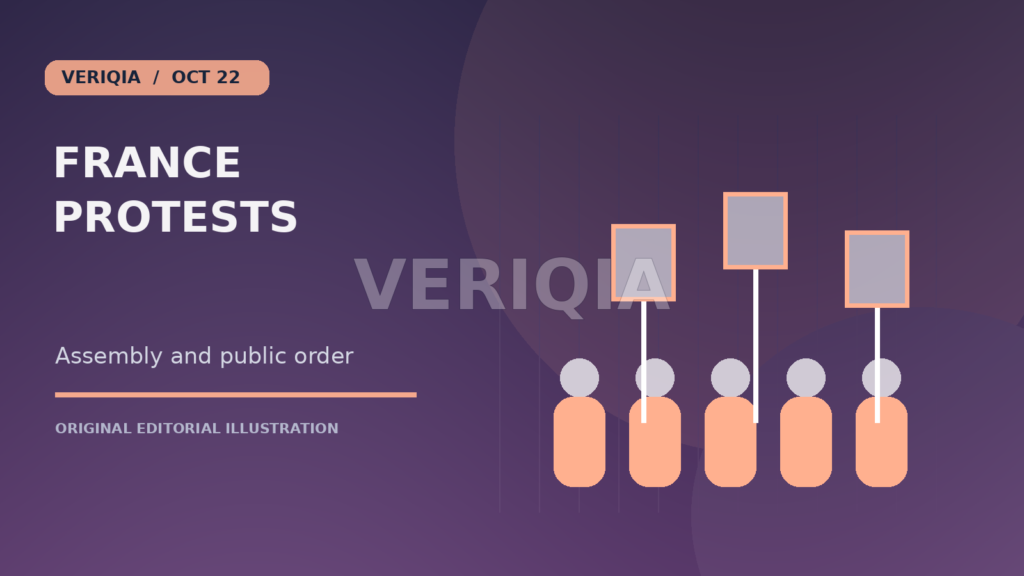
French authorities restricted some planned demonstrations after a weekend of unrest that included looting and clashes in several cities. The Associated Press reported bans affecting certain gatherings in Paris, Lyon, Lille and Grenoble, alongside increased security measures. The government argues that restrictions are intended to protect people, businesses and public infrastructure. Protest organisers say they want to continue raising concerns about education funding, university admissions and living costs. The central issue is how authorities balance public order with the right to peaceful assembly. A ban on a particular march should not be described as a prohibition on every form of protest throughout France.
How the student movement developed
High-school and university students have been protesting concerns about resources, access to education and the financial pressures facing young people. Some demonstrations broadened into criticism of living costs and government policy. The weekend's violent incidents changed the political and policing context, but they do not establish that every participant supported vandalism or looting. A large protest can include peaceful demonstrators, organised groups and individuals who engage in criminal acts. Accurate reporting should distinguish them rather than assign collective responsibility. The students' underlying complaints also deserve separate scrutiny, including the evidence on education budgets and admissions rules.
The government's public-order argument
President Emmanuel Macron condemned violent acts and supported stronger measures to prevent further disorder, according to the reporting. Authorities have considered routes and conditions for demonstrations organised through recognised trade unions, while rejecting some other planned gatherings. Police face a difficult operational problem when large crowds move through dense city centres with shops, transport hubs and public buildings. Restrictions can reduce certain immediate risks, but they can also intensify public frustration if perceived as arbitrary. The legitimacy of a particular decision depends on the law, the evidence of danger and whether less restrictive measures were available.
Why protest rights remain important
Peaceful assembly is a fundamental democratic freedom, even when the message is unpopular with the government. States can impose proportionate restrictions for safety, but blanket or indefinite bans raise serious civil-liberties questions. Courts and independent observers may assess whether authorities have shown a specific need for restrictions and applied rules consistently. Organisers also have responsibilities to communicate routes and avoid encouraging violence. The debate should not be framed as a choice between allowing all disorder and eliminating demonstrations. Democratic systems must manage public safety while preserving space for peaceful political expression.
What happened to city services and businesses
Violence and looting can disrupt public transport, damage property and cause financial losses for small businesses. Residents may also face curfews or changes to access around major public spaces. The costs are not limited to broken windows: staff may lose work hours, deliveries may be delayed and local communities may feel unsafe. Yet the economic effects of unrest should be documented rather than estimated from dramatic images alone. Authorities will need to distinguish verified damage from rumours and provide clear information about reopening streets and services. Businesses and residents benefit when emergency measures have predictable boundaries and end dates.
The role of unions and future demonstrations
Trade unions can provide established channels for negotiating protest routes and communicating with police, but not all student or community groups are formally affiliated with them. A policy that favours union-organised events may therefore be criticised for excluding other voices. French unions have a long history of public mobilisation, and their involvement can change both the scale and organisation of a demonstration. Reports indicated plans for additional action in the coming days. Those plans are not evidence that violence will occur. Authorities and organisers will need to make decisions based on current intelligence and the conduct of participants rather than assumptions about political identity.
How to follow a fast-changing situation
People in affected cities should check local prefecture notices, transport operators and municipal updates for specific restrictions. A national headline may not describe the legal position on a particular street or at a particular hour. Protesters should understand the conditions attached to authorised gatherings, while commuters may need alternative routes. Social-media videos can be useful but are often shared without reliable timestamps. Claims that a whole city is under lockdown should be checked against official orders. Readers should also distinguish arrests, charges and convictions, because each represents a different stage of the legal process.
What happens next
The coming days will test whether the restrictions reduce violence while allowing peaceful demands to be heard. Further demonstrations, court challenges or negotiations with unions could change the situation. The government's response will be judged not only by the absence of disorder but also by proportionality and public trust. Student groups will be judged by their ability to articulate specific demands and separate their movement from destructive acts. The October 22 developments show a tense confrontation over both policy and public space. The final outcome remains uncertain, and individual claims should be updated as evidence emerges.
The legal process may shape what happens next
Organisers may challenge restrictions through administrative or judicial procedures, while authorities may revise orders if conditions change. The existence of a ban does not by itself establish that it is lawful in every respect, just as a legal challenge does not automatically suspend the measure. Courts can examine whether officials relied on specific risks and whether the response was proportionate. Clear documentation of incidents, proposed routes and police assessments can help that review. Protest movements also face strategic choices about whether to negotiate alternative routes or contest restrictions publicly. These processes can be less dramatic than street confrontations, but they are central to how democratic institutions resolve disputes over public assembly.
The education issues at the centre of the demonstrations will not disappear merely because marches are restricted. Policymakers may need to publish clearer figures on staffing, admissions and funding to address the substance of the complaints. Student groups, in turn, can strengthen their case by identifying specific proposals and the evidence supporting them. Public debate is more productive when grievances are examined separately from the actions of people who commit violence.