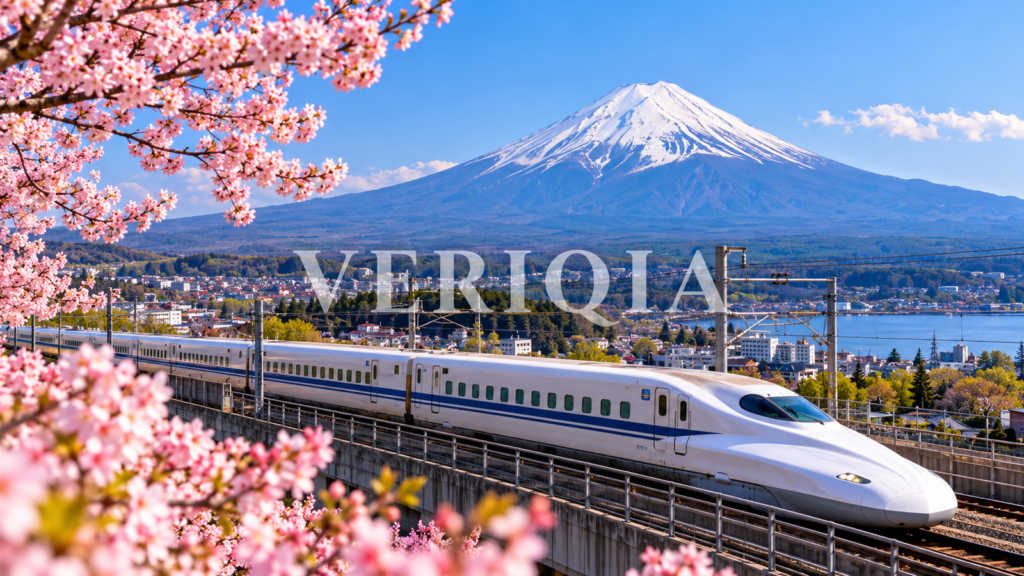
Japan Shinkansen Explained: How High-Speed Rail Works and Why It Matters
The essential answer
Japan’s Shinkansen is more than a fast train with a distinctive nose. It is a network designed around dedicated infrastructure, tight timetables, careful maintenance and connections to wider public transport. Travelers benefit from predictable journeys between major cities, while the country gains an alternative to short domestic flights and long highway trips. Understanding the operating model also shows why copying the trains alone would not reproduce the same results elsewhere.
What counts as Shinkansen
Shinkansen refers to Japan’s high-speed railway system and its services, not every express train in the country. Routes such as the Tokaido Shinkansen connect major urban centers on infrastructure designed for high-speed operations. Different operators, rolling-stock models, stopping patterns and ticket rules apply by route. Some services stop at many stations while others prioritize faster intercity journeys. Travelers should first identify the line and service name rather than assume a single train type serves the whole country.
Why dedicated tracks matter
High-speed operations depend on track geometry, signals, power systems, structures and separation from many ordinary railway conflicts. A train capable of high speed cannot use that capability safely or reliably on every conventional line. Keeping most high-speed services separate from local freight and commuter traffic helps schedule frequent departures. Maintaining the line to tight tolerances matters as much as the train itself. New national projects must budget for stations, depots and safety systems, not only vehicles.
Safety is a system, not a slogan
Rail safety involves train control, automatic protection, inspection, emergency procedures, staff training and operating rules. Drivers are supported by systems designed to prevent unsafe movement rather than relying solely on visual signals. Track, overhead equipment and train components require routine maintenance. Earthquakes and severe weather can also trigger restrictions or suspensions. Claims about an excellent safety record should be understood as evidence of layered processes and continual investment rather than a guarantee that disruption can never occur.
Why punctuality is hard work
Timely service comes from coordinated maintenance, precise dwell times, dispatching, staffing and passenger boarding practices. Timetables must account for trains sharing stations and terminal approaches. A delay to one service can affect several other departures when tracks are busy. Comparing average lateness between countries requires care because operators may define canceled trains and late arrivals differently. A timetable is useful to passengers only when reliability holds during everyday conditions as well as on ideal days.
How to choose between service types
Different Shinkansen services on the same corridor may stop at different stations, which affects both travel time and the availability of a direct journey. A faster advertised service can be less convenient if your destination needs a difficult transfer. Check departure station, arrival station, intermediate stops and connection time. Reservation requirements and baggage rules can differ by train or travel period. For a first trip, the operator’s official schedule and fare search provide a firmer answer than a generic journey estimate.
Tickets, fares and seating
Travelers may encounter a combination of base fare and limited-express charges. Seat reservations, class of service and special offers alter the total price. A rail pass is not automatically cheaper than buying specific tickets, especially for a short route or a trip involving trains not fully covered by a pass. Compare the exact itinerary and eligibility. During busy holidays, travelers should reserve early where permitted and verify what happens if a connection is missed.
The network and local economies
High-speed rail changes access between business centers and regional cities. A shorter journey can make meetings, tourism and university travel easier without an overnight stay. But stations do not automatically create prosperity. Local benefits depend on pedestrian access, feeder transport, businesses and whether the timetable serves useful travel times. Development near a station can be valuable while more distant communities see limited direct change. Economic evaluations should compare the costs of building the line with long-term usage and accessibility benefits.
Energy and environmental comparisons
A full train can carry large numbers of passengers using electric power, making rail attractive for many intercity journeys. The environmental result depends on the electricity mix, construction impacts, ridership and the travel mode replaced. A mostly empty service and a heavily used service have different per-passenger outcomes. Serious comparisons also account for station access and the life of tunnels and bridges. High-speed rail can be part of a lower-emission transport system without being impact-free.
A practical Tokyo-area travel example
Suppose you are choosing between a faster Shinkansen departure and a cheaper conventional rail route. Compare door-to-door time: reaching the terminal, boarding, the intercity segment, onward local transport and waiting for connections. Then calculate all fare components and baggage needs. A family may value reserved seating; a flexible traveler may prefer a lower-cost departure. The correct choice depends on the actual trip rather than treating the highest operating speed as the only important measure.
What other countries can learn
Japan demonstrates that operational discipline and station integration matter alongside engineering. High-speed trains need dependable power, safe separation from conflicting traffic, a funding plan for maintenance and practical fare systems. Importing a vehicle design cannot replace these foundations. Countries considering new corridors should publish realistic ridership assumptions and alternatives, including improved conventional rail. The best lesson is to plan a complete passenger service from street to station to destination.
What disruptions mean for a trip
Severe weather, maintenance and other operating conditions can still affect a railway known for reliability. When a train is delayed, the available alternatives depend on the ticket type, operator and connection. Use the official disruption notice rather than assuming a ticket is automatically valid on every replacement service. Leave a sensible buffer before an international flight. These are mundane details, but they often matter more to a real passenger than a promotional claim about high operating speeds.
The bottom line
The Shinkansen succeeds as an integrated transport system, not as a technology showcase. For travelers, understanding routes, service patterns and full fares leads to better choices. For policymakers, its lessons concern safety, maintenance, station connections and realistic demand. Speed is memorable, but dependable service is what turns high-speed rail into a useful part of daily life.
Questions worth checking
- Safety is a system, not a slogan — verify the current, location-specific information before acting.
- What explains punctuality is hard work — verify the current, location-specific information before acting.
- How does to choose between service types — verify the current, location-specific information before acting.
- Tickets, fares and seating — verify the current, location-specific information before acting.
For related coverage, explore VERIQIA World and the Asia-Pacific archive. Compare any new announcement with the date, scope and definitions in official records.