How a Bollywood Movie Is Made: From Screenplay and Casting to Release
A Hindi-language film usually travels through development, financing, pre-production, principal photography, editing, sound and visual finishing, certification, marketing and distribution before viewers see it. These phases often overlap and vary widely between independent films and large studio projects. A trailer release is only one stage of this process. Understanding what teams actually do explains why a film can take years to reach cinemas even when the on-set shoot lasts only a few months.
Where a film begins
A film may begin with an original screenplay, a book adaptation, a real-life idea or a producer’s concept. Writers work on story structure, characters, dialogue and revisions. Producers assess whether the project fits a likely audience and budget. Rights to underlying material must be clarified where applicable. Early announcements sometimes attach stars and directors before financing is final, so readers should not treat a development rumor as proof that cameras are rolling.
Script and creative preparation
The screenplay is more than a plot outline: it organizes scenes, locations, action and dialogue for production. A director may work with writers to refine tone and pacing while departments estimate what each scene requires. Songs and action sequences may need extensive planning. Storyboards or visual references help complex scenes. A rewrite after casting or location scouting is not unusual. A completed script reduces surprises but does not eliminate creative changes during filming.
Finance and budgeting
The budget must account for cast and crew, sets, locations, travel, equipment, costumes, music, effects, post-production and contingency. Marketing and distribution can be budgeted separately from production. Public figures describing a film’s “budget” may include different components, making comparisons difficult. Financing can involve producers, studios and commercial partners under varying contractual arrangements. A film with a smaller production budget is not automatically more profitable; revenue splits and promotional expenses still matter.
Casting and rehearsals
Casting directors and the filmmaking team search for performers suited to different roles. Auditions, scheduling and negotiations shape the final ensemble. Rehearsals can include dialogue, movement, choreography and stunt work. Casting announcements are attractive publicity but can change as contracts and schedules develop. A supporting actor’s availability may affect a location or shooting day. Professional sets also require attention to working conditions, child performers’ safeguards and safe choreography.
Locations, design and costumes
Production designers translate the script into physical environments, whether built sets, real buildings or digital extensions. Costume, makeup and hair teams establish the visual world and maintain continuity between shots filmed out of story order. Location permissions and logistics can strongly influence the shooting schedule. A glamorous sequence lasting two minutes on screen may require multiple days of lighting and setup. Weather and sound conditions can push a scene from an exterior location into a studio.
Principal photography
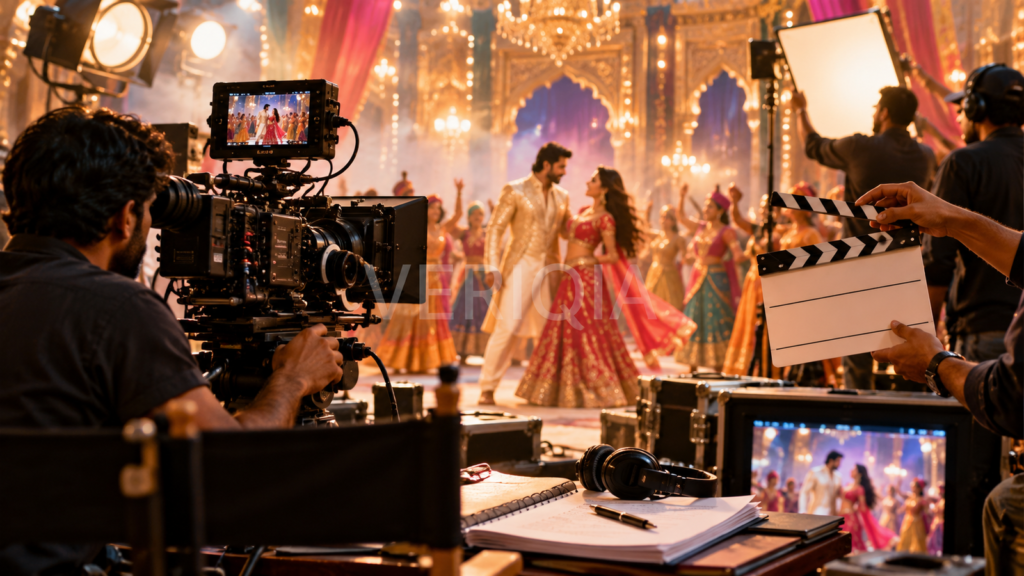
On a shoot, the director works with performers while cinematography, lighting, sound and production teams coordinate each setup. Scenes are often filmed by location and availability rather than story order. Different camera angles and repeated takes provide options for editing. A song sequence or large crowd scene can require more preparation than a dialogue scene. A “shoot wrapped” announcement means planned photography is complete, not that the finished movie is ready to release.
Editing and storytelling
Editors arrange selected footage into scenes and shape rhythm, clarity and emotional effect. An early rough cut can be much longer than the final version. Sometimes pickups or reshoots are requested to improve continuity or explain a character motivation. Editors collaborate with the director and sound team while trailers may be cut separately by marketing specialists. A scene seen in an early teaser can change or disappear before the final theatrical version.
Sound, music and effects
Sound design includes dialogue cleanup, ambience, effects and final mixing. Composers and music teams may create background score and songs, while dubbing and subtitle work prepare versions for different markets. Visual effects can extend sets, remove equipment, enhance action or create entire environments. Each component needs review and technical delivery. Visual effects should not be confused with all digital color work; grading sets the finished image’s color and contrast.
Certification and release planning
Films intended for theatrical exhibition in India generally follow an official certification process under the applicable rules. Distributors and exhibitors then determine release windows, screens and showtimes. Marketing includes posters, songs, interviews and trailers, but audience awareness does not guarantee ticket sales. Dates may shift because post-production, competition or distribution arrangements change. For reliable news, distinguish a producer-announced release target from a confirmed booking on cinema schedules.
Cinemas, streaming and business results
A film can earn income through theatrical receipts and rights deals including digital, television and music, but contracts vary widely. Gross ticket sales are not the same as the producer’s net profit. Streaming availability depends on distribution rights and territory, and may change after the theatrical window. Film success should be assessed using carefully defined numbers rather than social-media claims. A low-budget film can reach a strong audience while a star-led release may not cover its total costs.
Bottom line
Making a Bollywood film is a coordinated creative and business process involving far more than actors and a camera. Development decisions influence the shoot; production choices determine post-production workload; distribution shapes how audiences encounter the finished work. When tracking a movie, ask which stage it has reached and whether dates and financial claims are officially confirmed. That perspective makes behind-the-scenes reports clearer and avoids treating publicity as a completed outcome.
Frequently asked question
Does a successful trailer mean the movie is profitable?
No. Views, box-office gross, rights income, distribution shares and costs are different measures.