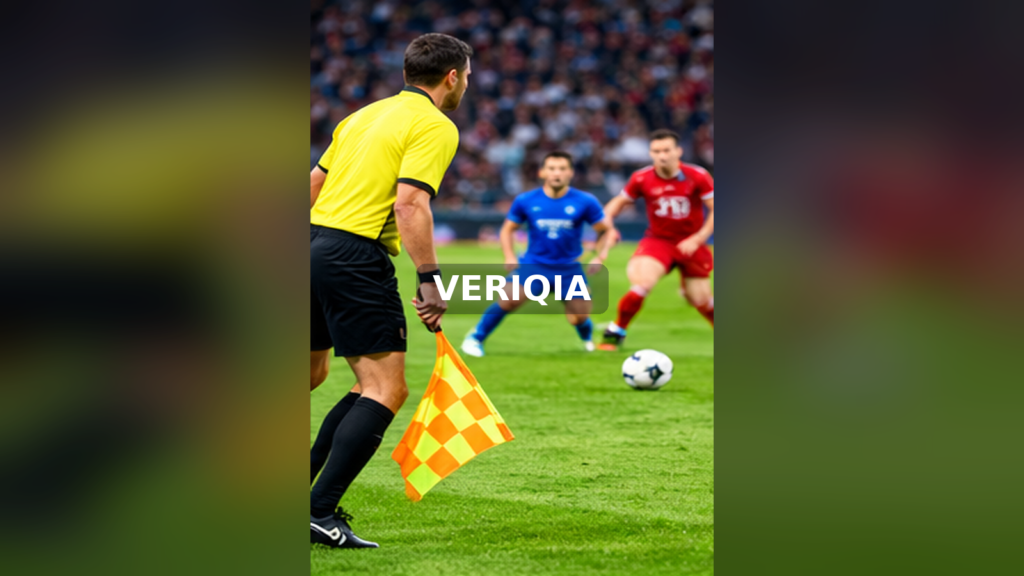
Football Offside Rule Explained: When an Attacker Is Actually Penalized
A player is not penalized merely for standing in an offside position. An offence arises when that player becomes involved in active play after a teammate plays or touches the ball, under Law 11.
Position and offence are different
The first question is where an attacker is when a teammate plays the ball. The next is whether that attacker interferes with play, interferes with an opponent or gains an advantage in one of the ways specified by the law. An attacker can be closer to goal than defenders without being punished if no relevant involvement occurs. This is why a flag may stay down when a forward does not pursue a pass.
What defines an offside position
An attacker must be in the opponents’ half and nearer the opponents’ goal line than both the ball and the second-last opponent, with details about the head, body or feet. Hands and arms do not count. Being level with the second-last opponent is not offside. The player does not need to be beyond the goalkeeper specifically; the law refers to opponents, because the goalkeeper may have moved out of the usual position.
Why the timing of the pass matters
The reference moment is when the ball is played or touched by the teammate, using the law’s precise timing provisions. A player who starts level, then runs behind defenders while the ball travels, may legally receive the pass. Conversely, a player who was offside when the pass was made does not become onside merely because a defender runs back before the attacker collects the ball. Replays focus on that timing.
What counts as interfering with play
Playing or touching a ball passed by a teammate is a common trigger. An attacker can also interfere with an opponent by obstructing the opponent’s line of vision, challenging for the ball, clearly attempting to play a nearby ball that affects an opponent, or otherwise making an obvious action with an impact. Merely standing in a position and not affecting anybody does not automatically constitute an offence.
Deflections and deliberate play
A ball rebounding from a post, crossbar or opponent may leave an attacker liable for gaining an advantage from an earlier offside position. The law treats deliberate play by a defender differently from a rebound or save, with important details about control and the nature of the action. A goalkeeper’s save does not automatically reset an offside situation. These cases are often difficult, which explains long reviews of apparently simple goals.
Throw-ins, corners and goal kicks
A player cannot be offside directly from a throw-in, corner kick or goal kick under Law 11. Later touches or passes can create a fresh offside question. This exception can support tactical movement at restarts, but it does not turn every subsequent action into a free pass. Watch the exact phase of play. A close-range tap after a corner might have a different offside analysis from the original delivery.
How VAR fits in
Video assistant referees may review offside decisions in qualifying match situations, according to the competition’s VAR protocol. Technology can help identify position and timing, but whether a player interfered with an opponent can require judgment. An on-field flag or a broadcast freeze-frame is not the whole legal analysis. Decisions should be judged against the applicable Law 11 wording, not a graphic alone.
Practical way to read an offside replay
Pause the video when the teammate plays the ball. Locate the attacker, the ball and second-last opponent, then determine whether the attacker is in the opponent’s half. Next ask what involvement follows. If a defender touches the ball, distinguish deliberate play from a deflection or save. This sequence helps explain why two similar-looking goals can correctly receive different decisions.
A four-step replay method
Start with the teammate’s touch and freeze the image at the legally relevant moment. Draw an imaginary line across the second-last opponent and compare the attacker with both that player and the ball. Then unpause and watch what the attacker actually does: touch the ball, challenge an opponent, block the view or gain advantage from a rebound. Finally look for any intervening deliberate play by a defender. This method will not resolve every difficult referee judgment, but it prevents two frequent mistakes: judging only the attacker’s finishing position and assuming that any player standing beyond the defense has committed an offence.
Offside and attacking tactics
Offside rules create a balance between long passes and coordinated defensive lines. Forwards time runs to begin from an onside position; defenders may step together to leave an attacker offside at the moment of a pass. A poorly coordinated line can instead create a clear chance. This is why a forward’s curved run or pause near midfield matters strategically. It also shows why technology cannot replace every judgment: positioning can be measurable, while interference with a goalkeeper’s vision or an opponent’s ability to challenge sometimes depends on context.
Worked example
Worked example: A striker is level with the second-last defender when a midfielder passes. The striker accelerates and receives the ball five meters beyond the defender. The position at reception does not itself make the striker offside because the relevant comparison is the instant of the pass.
Frequently asked questions
Can a player be offside in their own half?
No. Offside position requires being in the opponents’ half.
Does being past the goalkeeper mean offside?
Not necessarily; the law uses the ball and second-last opponent.
Is an offside position always a foul?
No. Active involvement is required for an offence.
Can someone be offside directly from a corner?
No, but a later teammate touch may create a new offside situation.
Read more relevant explainers in VERIQIA’s related coverage.